

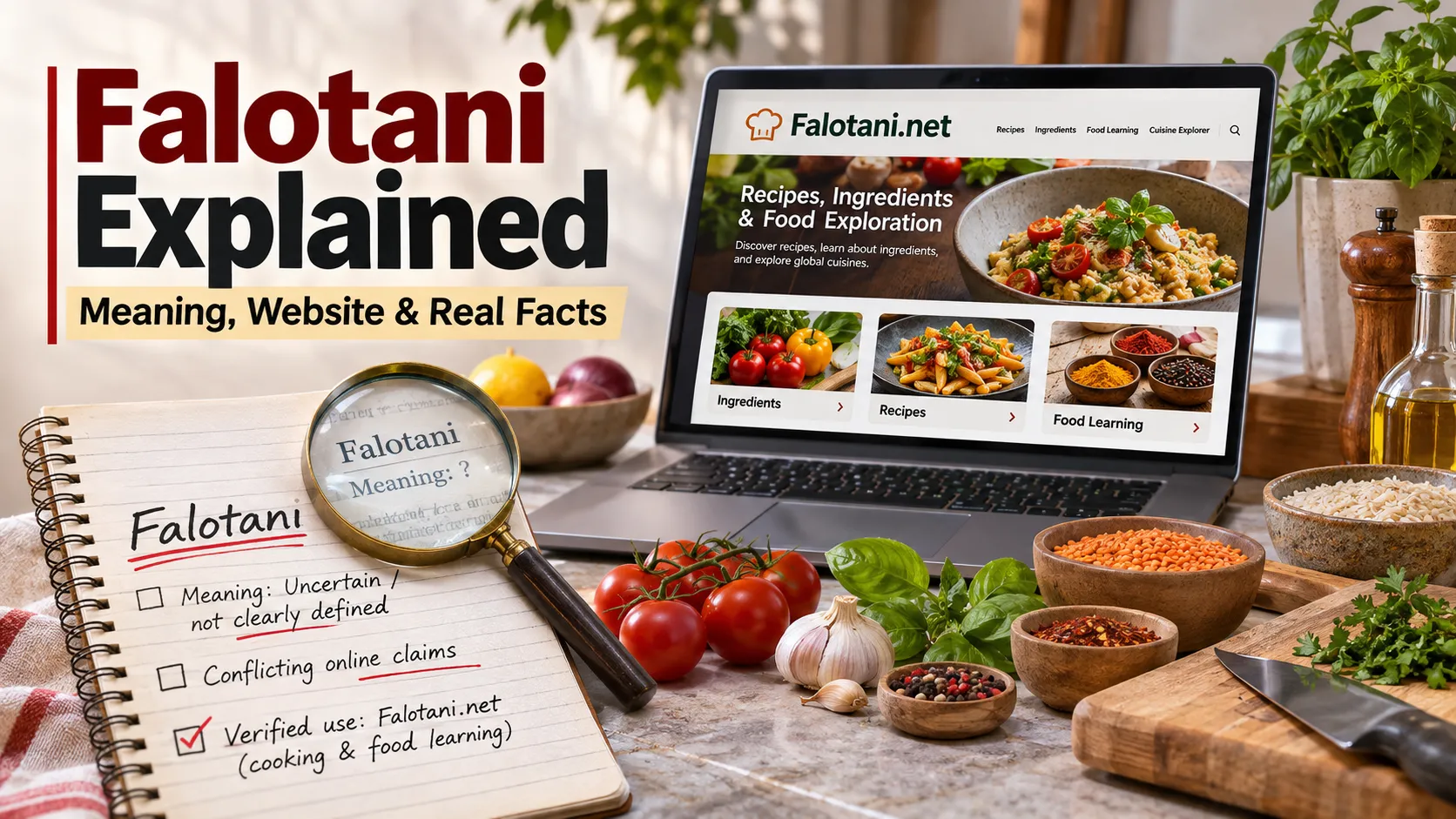
Falotani is an online term with several conflicting explanations, rather than one clearly established dictionary meaning. Its most identifiable use is Falotani.net, a website about cooking, international ingredients, and recipe experimentation. Other pages describe Falotani as a traditional dish, philosophy, or cultural practice, but those claims require closer examination.
For readers searching for the Falotani meaning, the key distinction is between something that can be directly checked and a story that has merely been repeated online.
What Does Falotani Mean?
There is no independently verified, widely accepted definition of Falotani in the sources reviewed. The word appears as the name of a culinary website and in articles offering different interpretations. That does not make the word meaningless, but it does mean its definition depends on context.
Someone sharing a Falotani recipe may be referring to a modern creation bearing that name. Someone mentioning Falotani.net is referring to a specific website. Neither usage proves that the word identifies an ancient dish or tradition.
A reliable explanation should name the particular use being discussed instead of treating every online description as interchangeable.
What Is Falotani.net?
Falotani.net presents itself as a food education and cooking inspiration platform. Its homepage focuses on global ingredients, flavor combinations, fusion dishes, kitchen efficiency, and adapting familiar recipes. The site’s stated audience includes curious home cooks and people interested in exploring food cultures.
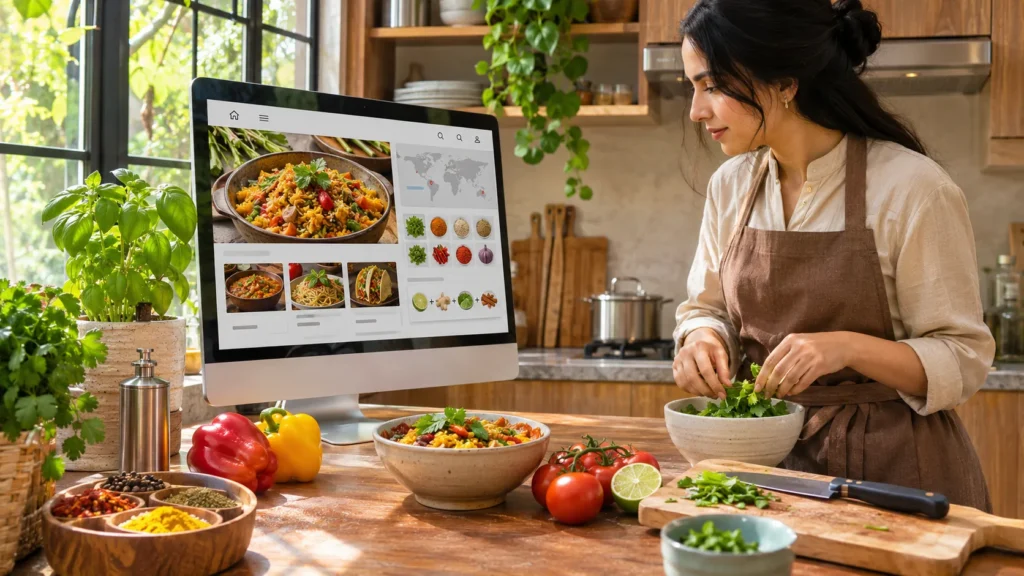
Learning Resources and Cooking Tools
Its Learning Resource Portal describes resources for improving cooking skills, understanding ingredients, and experimenting with flavor. Another section, the Next Gen Insights Tool, displays an ingredient-swap finder intended to help visitors identify alternatives when an ingredient is unavailable.
These are descriptions of what the website offers. They do not establish that its tools produce reliable results in every situation. Visitors should still check substitutions carefully, particularly when allergies, food safety, or specialized diets are involved.
The website also publishes material under categories such as Global Food Essentials, Flavor Pairing Techniques, and Recipe Adaptation Ideas. Its content provides a concrete explanation for why the term appears in searches related to cooking.
Who Founded Falotani, and Where Is It Based?
The website’s Our Story page names Zyvaris Dolthane as its founder and describes a mission centered on international food knowledge and culinary creativity. However, the Learning Resource Portal credits the Falotani Editorial Team with founding the platform. These are the site’s own statements, not independently verified ownership records.
There is a similar discrepancy concerning location. The Our Story page lists Frackville, Pennsylvania, while the Next Gen Insights Tool page identifies Bridgeport, West Virginia. The homepage footer also displays a Bridgeport address.
These differences do not establish that anything improper occurred. They do mean readers should avoid treating either address or founder attribution as independently confirmed until the website clarifies them or reliable external records become available.
Is Falotani a Real Traditional Dish?
Some online articles describe Falotani as a long-established food. One recipe article on Falotani.net connects the supposed dish to Ghana, Nigeria, and the Caribbean. However, the article does not provide independent historical documentation establishing that origin.
Descriptions published elsewhere are inconsistent. Some recipes present a spiced lentil stew; others describe filled breads or entirely different preparations. The ingredient lists and cooking methods do not point to one recognizable, well-documented traditional dish.
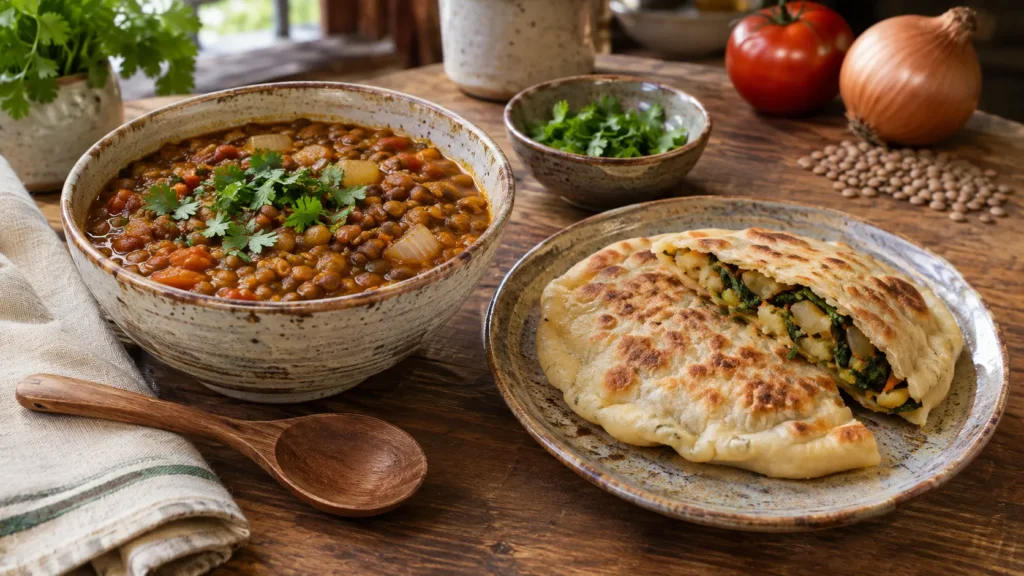
This does not prevent anyone from preparing a meal called Falotani. Newly created recipes can have imaginative names and still be enjoyable. The important distinction is between a recipe available online and an authenticated historical food tradition.
If you want to try a Falotani recipe, assess its instructions and ingredients on their own merits. Do not assume a cultural origin merely because a website describes the dish as authentic.
Does Falotani Mean Platonic in Urdu?
One possible source of confusion is the similar-sounding Urdu word aflaatuunii (افلاطونی). Rekhta Dictionary defines that word as relating to the Greek philosopher Plato, or “Platonic.” It also records other meanings in specific grammatical contexts.
The spelling Falotani is not identical to aflaatuunii. Similar pronunciation or flexible Roman Urdu spellings cannot, on their own, establish that the two words share the same meaning or origin.
Readers looking for the Urdu expression connected with Plato should consult the documented dictionary entry rather than relying on an unverified translation of Falotani.
Why Do Explanations of Falotani Conflict?
An unfamiliar term can attract articles written around different interpretations, especially when little primary documentation exists. Once one explanation appears online, later articles may repeat or modify it without establishing where it originated.
In this case, the meanings vary unusually widely. Food-related pages disagree over recipes, while other websites discuss philosophy, meditation, or historical practices. Even an article titled “Falotani” on the culinary site discusses relaxation techniques rather than defining a traditional recipe.
The existence of multiple articles does not make every explanation equally credible. Strong evidence would include a recognized dictionary entry, a documented historical recipe, or an identifiable organization making a clear statement about its own activities.
How Can Readers Check a Falotani Claim?
Start with the original source. If an article says Falotani is a dish from a particular region, look for established culinary references or historical documentation. If it identifies a founder or headquarters, distinguish what the website says from what independent records verify.
Check the exact spelling when language is involved, and compare ingredient lists when recipes make competing authenticity claims. Above all, remember that not verified does not automatically mean false. It means the evidence available is not strong enough to support a confident conclusion.
FAQs
Is Falotani a real word?
It is used online, including as a website name, but a single standardized definition has not been established in the sources reviewed.
Can you cook Falotani?
Yes, recipes using that name are published online. Their availability does not confirm that they represent one traditional dish or share a documented history.
Who owns Falotani.net?
The website names Zyvaris Dolthane as its founder, while other pages credit its editorial team. Independent legal ownership has not been verified.
Where is Falotani located?
The website lists both Frackville, Pennsylvania, and Bridgeport, West Virginia, on different pages. Neither operating location was independently confirmed.
Is Falotani an ancient cultural practice?
No reliable historical source reviewed established it as the traditional name of an ancient practice. Such claims should be treated as unverified.
Also, Read: Travel to Epic Adventures Beyond the Ordinary

1 Comment
Pingback: LCFTechMods Gaming Update by LyncConf: Is It Real? -